Home arrow Glossary
Video Surveillance Glossary of Terms
From the smallest business to the largest corporation, chances are they all rely on some form of video surveillance to keep their workplace secure. With so many advances in the video surveillance field and affordable options to choose from, finding the system to suit your specific needs can seem confusing.

However, with our guide, it has never been easier. This comprehensive glossary arms you with the necessary knowledge to successfully carry out your search and make the right consumer choices. As you research video surveillance products and equipment, you may come across terms you're not familiar with or want more information about. To help you better speak the language of video security, we have provided the most commonly used acronyms, terms and definitions.

To find the term you are searching for; just search the letter that it begins with. That will bring you to the word that you need, with only those glossary terms that begin with that letter. You will also be provided a chart similar to that shown below, but with active hyperlinks to each word contained on that page.


A
You can always search for entries (regexp permitted).

Begins with Contains Exactly matches

Submit Term

All | A | B | C | D | E | F | G | H | I | J | L | M | N | O | P | Q | R | S | T | U | V | W | Y | Z


There are 249 entries in the glossary.
Pages: 1 2 »
Term Definition
Access CardApproximately the size of a credit card, these are specially coded cards given to employees and allow them access to secure locations or devices at work. Access cards utilize several technologies such as magnetic strips, Barium Ferrite, proximity (active or passive), and other methods. They are often ‘swiped’ and read by a device that allows the user or employee access.
 
Access CodeSimilar to a password, this series of numbers or letters enables a user to access a system or computer. At job sites an access code can be the system or process that oversees employees or cars both in and out of certain areas.
 
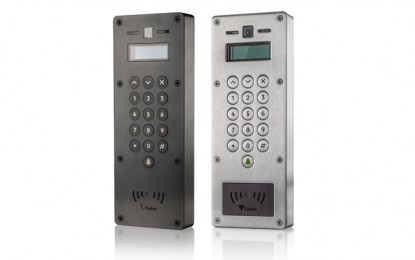
Access PointThese are specific entry points in certain secures areas. A card reader and monitor switches allow authorized entry by individuals with access cards.
 
ActiveXActiveX is Microsoft software component technology, mainly used by Microsoft Windows. They facilitate sharing of information between differing applications. Digital video recorders utilize ActiveX to remotely view security cameras online.
 
Activity DetectionMutliplexers use this feature, which is a video motion detection technique, to give relay closure for alarms and to improve the update times of video cameras.
 
AGC (Automatic Gain Control)AGC increases the signal strength of security cameras when the light level decreases, and puts a cap on it during higher levels; this keeps the output signal consistent.
 
AI (Auto Iris)A useful feature to have in a video camera, an auto iris compensates for variations in light levels, from sunlight to shadows. Essentially, the auto iris opens and closes the lens iris as the light changes; this also prevents the camera from being damaged by very bright sunlight.
 
Alarm InputWhen attached to a security camera, an alarm input provides enhanced security in the form of a sensor device, often a door contact or a Passive Infra-red detector for motion detection. Alarm inputs can be self powered or can require external power (usually 12V).
 
ALC (Automatic Level Control)Some security cameras feature ALC, which means the camera can bring out detail in bright or dark areas of an image. If too much sunlight makes an image too dark, ALC can focus on the needed image.
 
AlgorithmsIts general definition means a set of mathematical instructions to solve a task. In the field of video technology, they enable digital compression of the video picture.
 
Ambient Light LevelThis is the amount of background light present at any specific time.
 
Analog SignalAnalog signals are produced by most security cameras. Analog signals are continuously variable, and are greatly affected by ‘noise’ (disturbances) within the system, and recordings of analog information (such as videotapes) degrade over time. This doesn’t occur with digital signals recorded on media like CDs, DVDs and computer hard drives.
 
Angle of viewAlso known as viewing angle, this refers to the angular range available within a certain image size. The smaller the focal length, the wider the angle of view is.
 
AnnunciatorThis is a signaling device, either visual or audio based. For example, wireless annunciators use infrared beams that trigger an audible signal when interrupted, and can be used for security or retail purposes.
 
ApertureAn aperture is a lens opening that controls how much light reaches the film or digital sensor. Iris adjustment controls aperture size, and a series of f-stop numbers dictate how much light passes through the lens. A smaller aperture allows for better focus on objects outside the camera’s plane of focus.
 
ARP (Address Resolution Protocol)ARP is a method determining a host’s Ethernet address from its Internet address. The network receives the ARP request, and then names the IP address. Next, the machine at this address returns its physical address so the information can be sent to it. If supported by all hosts, Internet addresses can be independent of Ethernet addresses.
 
Aspect RatioAspect Ratio refers to the ratio between an image’s height and width. Differing mediums such as television, HDTV, and film, use different aspect ratios. Within computer graphics, it refers to the shape of an individual pixel in a digital image.
 
AttenuationA reduction in light strength or electrical signal, usually because of absorption or scattering, is called attenuation. The use of triaxial cables can minimize attenuation.
 
Automatic White BalanceCameras with this feature installed will automatically adjust color settings to achieve consistent quality in the white areas of the image.
 
AVC (Advanced Video Coding)Both the ITU and MPEG groups have agreed upon AVC as the current video compression standard. ITU calls it H.264, the MPEG group refers to it as MPEG-4, and the public calls it AVC.
 
Back FocusCameras are focused by moving the image sensor in relationship with the lens, which enables differing back focal lengths for the lens. This adjustment is called Back Focus and is important when fitting a zoom.
 
BacklashBacklash (measured in degrees) is when a camera’s Pan Tilt head cannot stop instantaneously, and is usually caused by excessive looseness in gears, pulleys, or other parts. Pre set PTZ surveillance cameras are rendered ineffectual by Backlash.
 
BalunThis stands for Balanced – Unbalanced. Physically, a Balun is a small transformer used to convert audio, video, or VGA signals from balanced to unbalanced, and vice versa. Its practical use is in creating required impedance adjustments for signal transmission between differing wiring systems (like UTP to coaxial cable).
 
BandwidthMeasured in bps, Bandwidth refers to a telecommunications link’s transmission capacity. The bandwidth available in a connection plays a large role in the speed of an Internet connection.
 
BiometricsBiometrics is the technology and science of authenticating individuals by measuring their physiological or behavioral features. In the field of security, they are technologies (‘readers’) used to analyze fingerprints, voice patterns, irises or retinas, etc.
 
BLC (Back Light Compensation)Cameras with this feature will automatically bring more detail to darker areas of an image when bright lights (usually shining from behind) obscure it.
 
BloomingThis refers to the defocusing and glow present around the bright areas of a picture when the brightness is increased. Some video cameras feature blooming suppression abilities to avoid this.
 
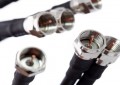
BNC connectorThese are a type of RF connectors that interconnect two coaxial cables or connect a cable with CCTV components. They’re used in Ethernet networks, video connections, network cards, and cable interconnections.
 
bps (Bits Per Second)This unit is used to measure the speed data is moved between sources. For example, a 56kbps modem can move 56,000 bits per second.
 
BridgingWhen a high impedance video line is paralleled to a video source, this is known as bridging.
 
BroadbandThis term defines a high bandwidth signal that is capable of carrying many channels of information simultaneously. Coaxial and fiber-optic cables are popular types of physical transmission paths for broadband signals.
 
Bullet CameraNamed in reference to its shape, a bullet camera is a type of security camera similar to a spot cam. Its limitation is a fixed focal lens (not zoom), but its small, narrow size makes it suitable for areas other cameras might not fit.
 
BurnBurn is the permanent freezing of an image onto a sensitive area of a camera or monitor, and can be avoided by shutting off the device when not in use, or closing an image or application when finished.
 
Bus NetworkThis is a network type where a transmission medium served as a bus between all attached terminals, and it’s the easiest and cheapest way to connect multiple clients. Computer motherboards and Ethernet networks both employ bus architecture.
 
ByteA unit of eight bits is known as a Byte.
 
C-MountThis is a specific type of camera, as well as its corresponding lens mount. The C-mount lens is found in older versions of security cameras, and has a flange back distance of 17.5mm. In order to achieve a focused image, a 5mm ring must be inserted between the camera and lens.
 
Cable trayThis tray is installed in many sites, and lays cables out lengthwise for economics and organization.
 
CameoA small part of a monitor’s viewing area (1/16th the screen area) is called a cameo. Multiplexers create multiple analog signals from security cameras and then combine them into multiple cameos on the screen, which enables simultaneous viewing of up to sixteen different camera pictures.
 
CandelaA candela is a measurement of luminous intensity and is a replacement to the candle.
 
CCD (Charge Coupled Device)This is a computer chip that converts the light energy that enters a camera into an electrical charge, which is then converted into an electronic image. The image is then optimized into a very high quality picture. There are two types of CCD: frame transfer and interline transfer.
 
CCTV (Closed Circuit Television)CCTV refers to the use of television cameras for surveillance purposes. Unlike broadcast television, all devices are linked directly, usually by cables. CCTV pictures are viewed and/or recorded, but are not broadcast. Usually involving analog cameras and recorders, CCTV is the precursor to digital network systems.
 
CIF (Common Intermediate Format)The default frame resolution of 352x288 for DVR systems is known as the CIF.
 
CMOSThe use of Complementary Metal-Oxide Semiconductors in imagers to sense images improves over CCD technology in resolution, dynamic range, and noise sensitivity.
 
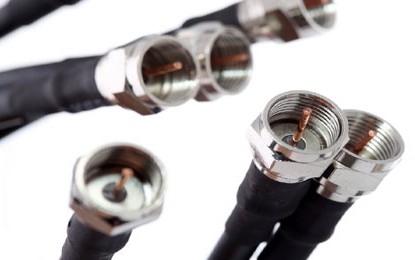
Coaxial Cable A cable with a central conductor that’s surrounded by a shield sharing its same axis is called a coaxial cable. It’s used primarily for carrying high frequency or broadband signals. RG59 video coaxial cable is used for digital video recorder (DVR) installations.
 
CODECCODEC means compressor/decompressor and is any technology used to compress and decompress data. It converts analogue input into digital, and then converts it back to analogue. CODECS can be either software applications or hardware components, or both. DVRs use CODECS to compress video streams from security cameras, and then store this compressed data on a hard disk.
 
Composite VideoThis type of video is a combination of different source video signals, usually YUV, field, line, blanking pedestal, color sync, and field equalizing pulses. The end result is one composite signal, allowing it to be modulated onto a RF carrier.
 
ConcaveA concave optical lens has an inward curving surface, causing incoming light to diverge.
 
ConvexA convex lens curves outwards, and is sometimes known as converging. Light that passes through converges to a focal point.
 
CovertA CCTV surveillance system that uses hidden cameras and lenses is considered to be covert.
 
CrosstalkIn a multiplex signal, video, audio, or data channels with adjacent signal frequencies can create interference. This interference produces a noise known as crosstalk.
 
CRT (Cathode Ray Tube)The CRT is a tube found in most televisions, monitors, and video monitors. Once heated, it creates images by emitting a beam of electrons that hit a phosphor-coated surface. The glow of the surface is dependent on the beam’s intensity. Each CRT uses deflection circuitry to control the beam’s movement.
 
CS MountCS mount lenses offer a longer focal distance than their C mount predecessors. They have a flange back distance of 12.5mm. Because they are more practical for compact cameras, CS mounts are used in most modern cameras. A 5mm spacer ring (known as a C ring) enables CS cameras to also use a C mount lens.
 
D1D1 is a resolution of 720x486 (NTSC) or 720x576 (PAL), and was one of Sony’s first digitized videotape formats.
 
dB (Decibel)A decibel is a logarithmic unit that measures the loudness, power, or strength of a signal.
 
DC (Direct Current)DC differs from AC (alternating current) in that electricity always flows thorough it in the same direction. A pair of wires has one positive wire and one negative. Many security cameras are 12 Volt DC, although some can operate at different voltages.
 
DD (Direct Drive)This uses a gearless drive mechanism, making it less prone to mechanical failure. PTZ security cameras will often use them for pan, tilt, and zooming.
 
De-multiplexingThis refers to the procedure of separating different channels of video, audio, or data that were multiplexed at the source.
 
Default GatewayIn order to send data or video between networks, the IP Address of the Router is required. This address is known as the Default Gateway.
 
Depth of fieldThis is the difference between the nearest and furthest points in a scene that remain in sharp focus. Depth of field is dependent on the F-stop and focal length of the lens.
 
DHCP (Dynamic Host Configuration ProtocoA DHCP refers to the protocol used by a host computer to obtain an IP address so that it can communicate with other host computers. These addresses are usually dynamic, meaning they change periodically, so a connection cannot be obtained (or maintained) over the open Internet. Use of both static IP addresses and dynamic DNS helps establish a consistent connection.
 
Digital SignalA sequence of binary bits that represent ones and zeros makes up a digital signal.
 
Distribution AmplifierThis device amplifies and distributes an audio or video signal to multiple outputs, such as several video monitors or recording devices. This device allows the maintenance of the original signal’s output impedance to avoid mismatches which could reduce the power required to properly drive the signal’s end point.
 
DivXDivXNetworks created DivX, a MPEG-4 digital video technology. Among its benefits is compression technology, which allows DivX equipped network cameras to store a month of video on a 20’gigabyte hard drive.
 
DNS (Domain Name Service)DNS is the system that matches server IP addresses to web site domain names.
 
Dome CameraA common indoor security camera, dome cameras are mounted on the ceiling. Their two main advantages are a more appealing visual appearance and being easily movable. Their drawback is a lack of usefulness during low light situations (therefore not effective when the lights are off).
 
DSL (Digital Subscriber Line)DSL is a digital telecommunications protocol that allows existing copper phone lines to be used for high-speed transfer of data between home and business end-users. xDSL refers to the various types of Digital Subscriber Lines which include: ADSL (Asymmetric DSL), SDSL (Single-line DSL), HDSL (High-data-rate DSL) and VDSL (Very-high-data-rate DSL). In theory, ADSL (the most common of these types), allows for download speeds of up to 9 Mbps and upload speeds of up to 640 Kbps. In reality, commercial performance is normally up to 1.544 Mbps download and 128 Kbps upload.
 
DSP (Digital Signal Processing)These chips can compress video independent of the CPU, which avoids the need to draw processing power from the CPU, allowing it to focus on other applications and computing tasks.
 
DTMF (Dual Tone Multi-Frequency)The scientific term for the Touch Tone signal used on telephones, it is the existing standard for the use of twisted wire pairs to send signals. Some PTZ cameras use DTMF signals in the transferring of telemetry information to the camera. This allows users to move the camera by dialing the number for that camera and then pressing buttons on their phone.
 
DuplexA type of multiplexer that allows you to simultaneously record images to tape and display live multiple-picture (or single picture) screen images of security cameras. Another capability that is provided is the ability to record images on one VCR while at the same time playing back previously recorded images on a second VCR. Compare with a simplex multiplexer which provides less features and capabilities.
 
DVR (Digital Video Recorder)This device transforms analog video signals from security cameras into digital format, suitable for storage on a hard drive. It also helps the user manage the stored video files, as well as providing motion detection settings and PTZ security camera control. DVRs can often be remotely accessed over the Internet.
 
Dwell TimeThe time a multiplexer or DVR stays on an individual camera before moving onto the next one in the sequence is known as dwell time.
 
Dynamic IP addressThis is the rotation of IP addresses such that every time a user logs onto the Internet, their IP address changes. This is done for Internet security purposes, either by the user or by their ISP. This process can interfere with the use of networked devices such as Network IP Cameras because they normally require a static IP address to function properly.
 
Dynamic RangeA camera with a wide dynamic range is able to operate in variable light conditions (known as lux levels), especially those of low light. A “dB” is usually the unit used to measure the dynamic range of security cameras, with more being better. A camera with a 60 dB dynamic range would be well suited to clearly record a scene in low or high light levels.
 
E-mail notificationThis is a feature of certain motion detecting Network IP Cameras. When activity is detected, they can email authorized users images or video. Griffid is one example of camera management software that accomplishes this.
 
EI (Electronic Iris)Certain CCD security cameras utilize an electronic iris to electronically mimic a traditional auto iris. One drawback of an EI is that excessive light damages it over the long term.
 
EIA (Electronic Industries Association)EIA is both an electronics trade organization that develops industry standards and a term associated with serial communications applicable to digital video recorders.
 
Electronic ShutteringThis term applies to video cameras that compensate for moderate indoor changes in light without use of auto iris lenses.
 
Embedded operating systemCameras with this can also operate as computers. With an OS like Linux installed, they can perform other tasks such as sending images to a web site via FTP, email notification, and being simultaneously accessible by multiple users.
 
EMI (Electro Magnetic Interference)If improperly shielded, most electronic equipment causes EMI. The FCC sets the standards for electronic equipment shielding.
 
EthernetEthernet can send information either wirelessly (known as WiFi) or, more commonly, over wires. It runs at 10mbps, and all terminals connect to a single common bus (sometimes called a highway). It serves as the IEEE (Institute of Electrical and Electronics Engineers) 802.3 standard, which ensures that networks adhere to a particular set of technical standards. A new type, known as Fast Ethernet, or 100Base-T, runs at 100Mbps, and the newest type, Gigabit Ethernet, runs at 1gigabit per second.
 
Event recorderThis type of recorder is kept in pause mode, and only records if activated by an alarm.
 
Extruded aluminumThis type of aluminum is used to construct housings for CCTV (closed circuit television) applications and provides the added benefits of increased strength, durability and resistance to harsher environmental conditions as compared to plastics.
 
f-numberThis is used to indicate image brightness as formed by the lens and controlled by the iris. The smaller the f-number, the brighter the image is.
 
f-stopThe light gathering ability of a lens (known as a camera lens aperture setting) is indicated by an f-stop. Using a smaller f-stop number results in a greater amount of light passing through the lens, as well as a shallower depth of field.
 
Fast lensHaving a larger iris (and smaller F-stop), a fast lens gathers and transmits increased light to a surveillance camera.
 
FCC (Federal Communications Commission)This United States commission regulates communications by setting rates, controlling broadcast licensing, and testing electronic equipment to RF (radio frequency) transmission and related standards.
 
Fence disturbance sensorThe perimeter fence around a site may have one of these installed around it for intrusion detection. These sensors can be interfaced with a CCTV switcher so that specific cameras are activated in an area where the disturbance is detected.
 
FI (Fixed Iris)These widely used fixed focal length iris lenses are inexpensive and are found in smaller types of fixed CCTV security cameras, usually small case or dome cameras.
 
Fiber OpticsThese high-speed computer-networking cables transmit data using light instead of copper.
 
FieldA field is one half of a frame, with 262.5 lines in the NTSC standard. Interlaced television monitors display their images in two steps. The first step paints every other line, while the second paints the remaining ones. Progressive monitors present a complete field with each frame. Sixty fields are transmitted each second.
 
Field of viewThis is the total height and width of the view seen through the lens.
 
FirewallA firewall is a software or hardware application installed on a home or office computer that is intended to prevent unauthorized users from accessing that computer. With hacking and network intrusions on the rise, they are becoming essential in protecting private information. Four popular types of firewall are packet filtering, application gateways, circuit-level gateways, and proxy servers. Although they can be difficult to configure correctly, they are a critical component to protect unauthorized access and hacking of IP based surveillance systems that are LAN based.
 
Flange backThis refers to the distance from lens flange (the beginning of the lens mount) to the focal plane. The flange back measurement for C-mount lenses is 17.52mm, while CS-mount is 12.5mm.
 
Focal LengthFocal length is measured in mm or inches, and is the distance between the optical center of the lens and the point on which it focuses. A lower focal length results in less magnification with a greater field of view, and vice versa for longer focal lengths. Security cameras usually have a focal length of ¼”, 1/3”, or ½”.
 
fps (Frames Per Second)In the field of video surveillance, fps means the number of frames a DVR is able to capture per second. Three steps are required: video capture, compression, and storage. Each step affects a DVR’s true fps number. The use of DSP chips in both IP cameras and DVRs can assist in the optimization of fps.
 
FrameOne complete picture is called a frame, and it contains 525 lines (NTSC) or 625 lines (PAL).
 
FTP (File Transfer ProtocolFTP is a client/server protocol used for the exchange of data between computers. Network cameras with an embedded operating system use FTP to send camera images to an authorized user’s computer or web site.
 
Gamma correctionThis refers to an automated correction installed into surveillance cameras that adjusts for the brightness characteristic of the monitor, with the range being from .6 to 1.
 
Gen-lockThe use of composite video, composite sync, or vertical or horizontal sync to synchronize one or more cameras is known as Gen-lock.
 
GhostAlso known as ghosting, this is when an image moved across a computer screen leaves a brief lingering shadow of itself where it had just been, creating a kind of smear or blur. Lower quality computer screens often leave ghosts. Technically, the secondary visual signal has been created and received either earlier or later than the primary signal itself.
 
Ground LoopThis type of picture interference is caused when the ends of a video cable have differing ground potential, causing an AC current. This is either a black shadow bar onscreen or a tearing in the top corner of the picture results. The use of ground loop insulators prevents this problem.
 
GUI (Graphical User Interface)Pronounced ‘gooey’, this is the interface between the computer and the matrix switcher. Active areas of the computer screen are programmable, feature menus, icons, are clickable, and able to activate devices such as VCRs and matrix switchers. Essentially, the GUI makes the CCTV system easier to use.
 
HertzA Hertz (Hz) is the unit used to measure frequency, with 1 Hz equal to 1 cycle per second.
 
Horizontal hum barsSometimes called Venetian blinds because they are horizontal bars (either black or white) that extend across an entire picture. They’re either moving or stationary, and are the result of roughly a 60 Hz interfering frequency (usually from a 60 Hz AC power source).
 
Horizontal resolutionThis measures the maximum amount of individual picture elements recognizable in a single scanning line.
 
HTML (HyperText Markup Language)HTML is the language used in the creation of WWW pages, with use of hyperlinks and markup for text formatting.
 
HTTP (HyperText Transfer Protocol)This is the protocol utilized to transmit and request information from WWW servers to browsers, either online or over networks.
 
HubNetworks rely on devices called hubs to connect multiple computers together into a LAN. Standard hubs share the bandwidth across all ports (so an eight port 100 Mps hub allocates this 100 Mps among the eight ports), while switching hubs are able to give each individual port a dedicated bandwidth amount (so these same eight ports could conceivably each receive a full 100 Mps of bandwidth on a switching hub).
 
IFrameAn IFrame is a complete image frame (known as an Intra Frame) in MPEG encoding that is coded without reference to other pictures. Compression is achieved by reducing spatial redundancy in the image, but not temporal redundancy.
 
Image intensifierThis device is used to intensify low-level lighting conditions via light sensitive phosphor screens, and is specifically used to improve the performance of surveillance cameras in low light conditions.
 
ImpedanceMeasured in ohms, impedance describes the input and output characteristic of an electrical system. For the best signal quality, both input and output impedances should be equal, with CCTV systems having 75-ohm impedance throughout.
 
Index of refractionThis ratio measures the angle of incidence to the angle of refraction of light, with a denser medium bending more light and having a higher index of refraction.
 
Infrared cameraThese cameras are well suited for surveillance of low light areas or areas with no light at all. Infrared LEDs surround the lens and shine infrared light, illuminating the scene. They usually have a fixed focal length lens, and present b/w images during low light (though some offer color in the day and b/w at night).
 
Infrared detectorThis is an alarm that uses infrared light to detect nearby movement.
 
Infrared illuminatorA light source working in the infrared frequency range is called an infrared illuminator.
 
Infrared radiationInvisible to the human eye, this electromagnetic radiation has a wavelength of greater than 750 manometers.
 
Injection molded plasticSmoked or tinted plastic (but still translucent) is melted into a liquid from pellets and injected into a “dome-shaped” mold to construct security camera dome housings.
 
Insertion lossIf the inclusion of an electronic device into a line diminishes the signal’s strength, it’s called insertion loss.
 
InterlacedThis refers to a type of display where the electron beams alternate between scanning the even numbered lines and then the odd numbered lines, resulting in the two vertical scans on the screen, with the field (each set of lines) being updates 60 times a second, and with the frame (both fields) updated 30 times a second.
 
InterleavingSome alarms and security systems use the process of interleaving to add extra frames from alarmed cameras to a time multiplexed sequence while the alarm is activated. This prioritizes the view from alarmed cameras in the sequence of camera views.
 
IP (Internet Protocol)This is the protocol used to route a packet of data from source to destination over the Internet. Every computer on the Internet has a different IP address that identifies it from other computers.
 
IP addressThis is a numeric address that is then translated into a domain name by the DNS (domain name server). When we type in a website’s name, the computer translates this into its IP address, which is a unique 32-bit number. The TCP/IP protocol then uses it for routing the data packets to their destinations. Each host has a unique IP address.
 
IP Camera (or Network Camera)This signal from an IP camera is delivered over an IP network. The camera digitizes the images, compresses them, and then sends them over the network (if this sounds similar to a webcam, that’s because there is digital webcam technology contained within a network camera). But a typical IP network camera is much more advanced as compared to a consumer web camera which needs to be attached to a computer to operate. IP enabled security cameras usually offer a browser interface so that the user can operate and view the video remotely over the Internet. A DVR system is often comprised of an IP camera and a NVR.
 
IrisThe section of the lens adjusted to control how much light passes through it and onto the CCD chip is called an iris.
 
ISDN (Integrated Services Digital NetworISDNs are digital telecommunications lines that transmit voice and digital network services. Many telephone companies provide them, due to their superior reliability and speed (up to 128K) over analog modems. The ISDN standard improves compatibility for the integrated digital transmission of voice, video, and data over normal copper telephone wires, which allows for better quality and speeds. There are two primary types of ISDN: BRI (Basic Rate Interface) and PRI (Primary Rate Interface). PRI is faster, with speeds on par with T-1 circuits.
 
ITU (International Telecommunications UnCurrently, 113 countries participate in the ITU, which is an agency of the United Nations. Existent since 1865, the ITU is responsible for developing international telecommunications for networked telecommunications. The ITU-R is a subchapter, and is responsible for managing radio frequency spectrum (including television and video) standards.
 
JoystickPTZ controllers utilize this stick as a control device for pan and tilt movement of a PTZ security camera’s pan and tilt head.
 
JPEG (Joint Photographic Experts Group)This is one of the most common file formats for compressed photo images. A small amount of data, though not noticeable enough to be significant, is lost in the compression process, making JPEGs a lossy compression algorithm.
 
LAN (Local Area Network)A LAN is a high-speed network connecting computers that are nearby (probably in the same building), and offers differing connection protocol options.
 
LatencyThe speed of a network is dependent on both latency and bandwidth, with latency referring to the time needed for an IP packet to travel from source to destination. Wide bandwidth and low latency are preferable.
 
LED (Light Emitting Device)Monochrome surveillance cameras use LEDs to provide infrared light. An LED creates an infrared light frequency when stimulated by an electric charge.
 
LensThis is the device responsible for focusing the image on the CCD, and most offer adjustable focal length and aperture.
 
Level controlLevel control is control of the main iris, and sets the auto-iris circuit to a specific video level of the user’s choice. The iris is therefore set to maintain this video level no matter what the light condition may be. A high level opens the iris; a low level closes it.
 
Light sensorOften used to turn infrared illuminators on or off, this device is triggered when it detects a pre-set amount of light, and helps cope with low (or no) level light conditions.
 
Limit switchA security camera’s pan and tilt head with one of these devices installed (either inside or outside it) is limited in the angles it can move.
 
LinuxLinux is an open source UNIX implementation, and a popular alternative to the Windows operating system. It is often used in embedded operating systems found in advanced Network IP Cameras. Linux is freeware.
 
Loss PreventionBest summarized as ‘not having anything stolen’, loss prevention is the practice of securing devices or information from theft or loss. Video surveillance is a common practice in preventing theft or other losses of property like vandalism.
 
LumenA lumen (abbreviated as lm) is a unit that measures the visible power output of a light. While watts measure the power the bulb needs, lumens measure the visible light that the bulb generates.
 
LuxUsed more often than lumens when discussing security cameras, a lux is a unit of illumination. It measures the amount of uniform light that falls on one square meter (expressed in one lumen per square meter). Security camera specs use the lux to indicate how much light they require to operate, with lower lux levels indicating a camera as more effective in lower ambient light. Look for 0.2 lux or less when choosing a low-light camera, and 2 lux or higher for daylight cameras.
 
Matrix switcherWhen a CCTV system needs to route one camera input to many monitor outputs, it utilizes a device called a matrix switcher.
 
Mimic panelThis panel displays a site’s layout, including the location of surveillance cameras. When the panel is interfaced with a switcher, it can be used to switch any specific camera to the monitors.
 
Minimum scene illuminationThis information (found on a camera’s data sheet) displays the minimum light level the particular camera needs in order to provide an acceptable monitor picture.
 
MJPEG (Motion JPEG)Even though it’s not as efficient as MPEG-4, the MJPEG is still an effective way of creating video from the sequencing of JPEG images. The video from store security cameras often uses this method when being formatted.
 
MMS (Microsoft Media Services)MMS is the first streaming protocol created for the Microsoft Windows Media Player.
 
MOD (Minimum Object Distance)This refers to the closest an object can be to the vertex of the lens and still be in focus. The wider the lens angle, the smaller the MOD.
 
MonochromeMonochrome means having a single color, or black and white for television.
 
Motion DetectorsThese devices are used to detect motion on security cameras. Simple motion detection triggers the camera to either record or set an alarm. Motion detection by frame region instructs the camera to respond only if a certain area of the screen/frame detects motion. Finally, advanced motion detection analyzes the type of motion to see if it warrants alarm (such as crossing into a secure area). One benefit of motion detectors is that cameras only record when motion has been sensed, which saves disk space.
 
MPEG (Moving Picture Experts Group)One of the most common coding standards for internet transferable video images, the MPEG format is playable on nearly all free and payware video players. MPEGs use lossy data compression. MPEGs first predict the initial picture content, and then code differences between that and the copy, as well as any extra information.
 
MPEG-4MPEG4 has a newer codec and supports 3D content, low bit rate encoding, and support for Digital Rights Management, which controls the use of copyrighted digital work. MPEG4 is used for web streaming media, broadcast television, videophones, and CD distribution. MPEG-4 is widely used in video surveillance, and has recently been improved to the AVC standard.
 
MTBF (Mean Time Between Failures)MTBF measures the average time that a device works properly without failure; unfortunately, it’s usually measured in hours. An hour measurement does not translate well to the average consumer looking for life expectancy in years.


All | A | B | C | D | E | F | G | H | I | J | L | M | N | O | P | Q | R | S | T | U | V | W | Y | Z